The University of Tennessee, Knoxville, occupies a unique and often underestimated position in the landscape of American public higher education. It is not merely an institution of learning perched on the banks of the Tennessee River; it is a living entity whose identity is deeply interwoven with the geological, historical, and cultural fabric of the region. To understand UTK is to look beyond its academic rankings and into its role as a steward of place, a catalyst for a specific kind of rugged innovation, and a community grappling with the complex legacies of the American South.
The campus itself feels like a physical manifestation of this story. The distinctive orange brick of its buildings is more than a school color; it is a statement of permanence and material connection to the earth. These structures do not aspire to the Gothic grandeur of older Eastern universities or the sleek glass of coastal tech hubs. They are substantial, grounded, and speak to a history of practical creation. The Hill, the university’s historic core, rises from the plain, offering a panoramic view of the Great Smoky Mountains in the distance. This is not a scenic backdrop for mere postcards; it is a constant, silent reminder of the immense natural forces that have shaped life here for millennia. The university’s research into forestry, wildlife, and agricultural science feels like a direct intellectual extension of this physical environment, an ongoing conversation with the land itself.
This connection to the land is inextricably linked to one of the nation’s most ambitious modern projects: the Tennessee Valley Authority. Established in the 1930s, the TVA was a monumental effort to harness the power of the river for electricity, flood control, and economic development. UTK did not just observe this transformation; it became its academic and research partner. The university’s expertise in engineering, agriculture, and public policy was poured into the TVA’s mission, creating a symbiotic relationship between a public utility and a public university that is rare in its scale and intimacy. This legacy continues today, fostering a culture of applied research where theoretical knowledge is tested against real-world problems of energy, infrastructure, and environmental management. Innovation at UTK often carries this utilitarian character—it is about building, solving, and improving in tangible ways.
Yet, to exist in the South is to exist within a complex historical narrative, and UTK is no exception. The campus is dotted with monuments and markers that tell a layered and sometimes conflicting story. The Ayres Hall clock tower is an iconic symbol, yet the campus also holds the ghosts of a past that includes the Civil War and the struggles of the Civil Rights movement. Like many Southern institutions, UTK is engaged in an ongoing process of reconciling its traditions with a more inclusive and accurate historical memory. This is not a quiet academic exercise; it is a dynamic, often challenging, dialogue that plays out in classroom discussions, campus activism, and administrative policies. The university’s identity is being actively negotiated between a proud, sometimes insular, regionalism and the imperative of a diverse, global future.
The student experience reflects this duality. On one hand, there is the powerful, almost tribal, sense of community fostered by Southeastern Conference football. Neyland Stadium, a colossal structure by the river, becomes the spiritual heart of the campus on autumn Saturdays. The sea of orange, the roar of the crowd, and the singing of Rocky Top create a unifying cultural force that binds generations of alumni. This athletic passion is a genuine form of social glue. On the other hand, the student body is increasingly diverse, bringing perspectives from across the country and the world. This infusion of new voices challenges old assumptions and enriches the academic environment, creating a vibrant tension between deep-rooted tradition and a rapidly changing present.
In its academic pursuits, UTK has carved out niches of excellence that again reflect its grounded mission. It is a leader in nuclear engineering, a field that demands both theoretical brilliance and immense practical responsibility, echoing the TVA’s legacy of large-scale energy production. Its research in data science and advanced materials is often directed toward manufacturing and logistics, key industries for the state of Tennessee. Even its arts and humanities programs are increasingly exploring the unique cultural heritage of Appalachia and the South, contributing to a critical understanding of this often-stereotyped region.
Ultimately, the University of Tennessee, Knoxville, defies easy categorization. It is not an ivory tower. It is an institution built from the very clay of its setting, shaped by a mighty river, shadowed by ancient mountains, and forged in the fires of American history. Its strength lies in its authenticity. It is a place where big ideas are expected to get their hands dirty, where tradition is both a comfort and a challenge, and where the future is being built not in the abstract, but with orange brick and solid resolve. To know UTK is to understand a vital piece of the American public university system—one that is unapologetically of its place, yet steadily reaching beyond it.
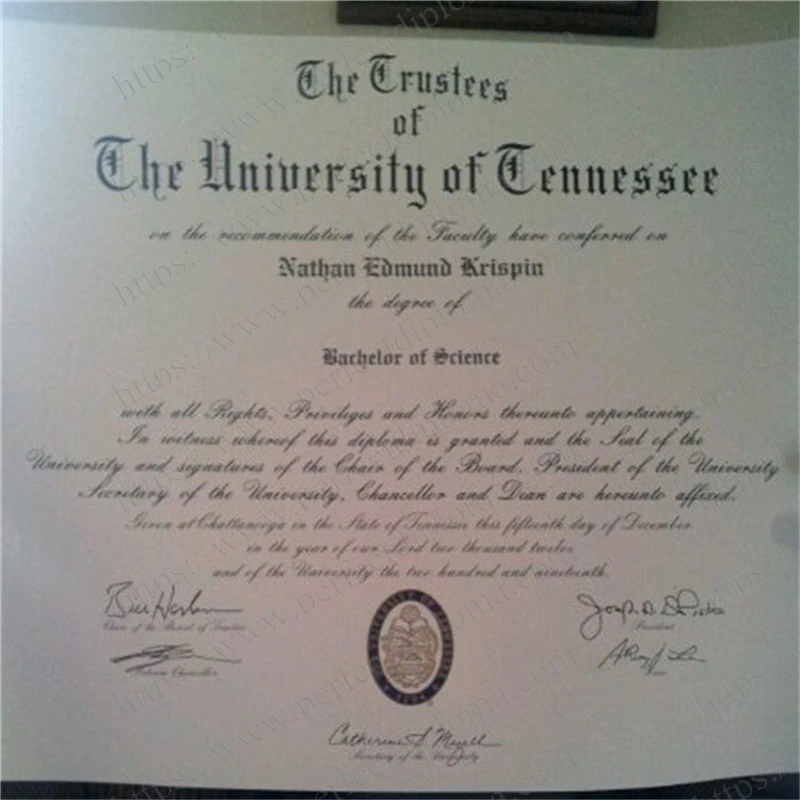
Buy fake The University of Tennessee, Knoxville degree, Fake degree online, Get The University of Tennessee, Knoxville fake diploma, Can i get to buy The University of Tennessee, Knoxville fake degree?