The coastline defines a certain kind of learning, a rhythm dictated not by semesters alone but by the persistent whisper of the tide. At institutions like the Coastline Colleges scattered along the edges of the United States, education is an immersive experience, a dialogue between the structured world of academia and the fluid, powerful presence of the ocean. These are not just schools by the sea; they are institutions fundamentally shaped by their environment, offering a pedagogy as unique as the shoreline itself.
The curriculum at such a college is inherently interdisciplinary, with the marine world as its central laboratory. A biology class is not confined to textbooks; it involves wading into tidal pools to study the resilient ecosystems within, or collecting water samples to analyze the delicate balance of marine chemistry. An economics lecture might pivot to the complexities of sustainable fisheries or the financial architecture of port cities. Literature courses explore the works of authors like Hemingway or Melville not as distant classics, but as narratives echoing the very waters visible from the classroom window. The environment is not a passive backdrop but an active participant in the learning process, making abstract concepts tangible and urgent.
This connection fosters a powerful ethos of environmental stewardship. Students at a coastline college witness the effects of climate change firsthand, from subtle erosion patterns to more dramatic shifts in local wildlife. This direct observation transforms theoretical concerns about sustainability into a personal mission. It is common to find student-led initiatives focused on beach restoration, campaigns against plastic pollution, or research partnerships with local marine sanctuaries. The education they receive is not for its own sake; it is an education meant to be applied, to protect the very landscape that serves as their campus. This creates a graduate who is not only knowledgeable but also deeply accountable.
Furthermore, the social and cultural fabric of these colleges is distinct. They attract a specific type of individual—the surfer who is also a dedicated environmental science major, the aspiring marine policy expert who spends weekends volunteering at the aquarium, the artist drawing inspiration from the play of light on the waves. This creates a community bound by a shared appreciation for a particular way of life. The pace feels different, often more reflective, attuned to natural cycles. The sense of place is profound, with student identity intricately linked to their coastal location, whether it is the rugged cliffs of the Pacific Northwest or the calm, sandy shores of the Gulf.
The challenges of this model are as real as its benefits. The very beauty that defines these campuses can sometimes lead to a sense of isolation from the inland world, a bubble of coastal perspective. There is also the constant, low-level threat of coastal hazards, from hurricanes to king tides, which requires a level of preparedness and resilience woven into institutional planning. The cost of living in desirable coastal towns can also be a barrier, potentially limiting the socioeconomic diversity of the student body.
Yet, the value of a coastline education lies precisely in its specific, place-based approach. In an increasingly homogenized world, it offers a rare and vital thing: an education rooted in a specific geography. It teaches students to read the landscape, to understand interconnected systems, and to appreciate the fragile boundary between land and sea. It cultivates a mindset that is both broad, considering global oceanic currents, and intensely local, concerned with the health of a single stretch of beach.
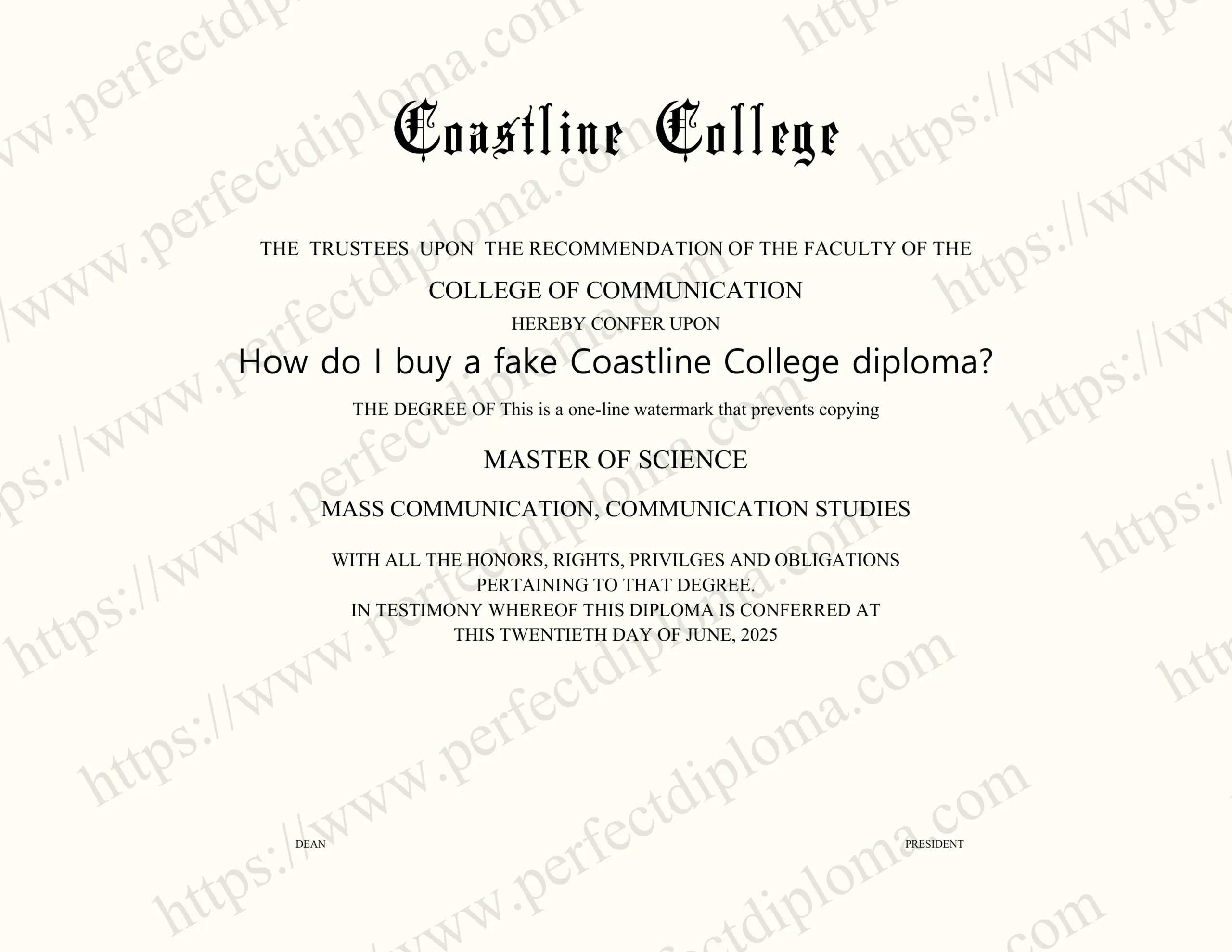
Ultimately, a Coastline College does more than grant degrees. It shapes citizens of the shore. It produces oceanographers who understand the human communities that depend on the water, entrepreneurs who build businesses around sustainable coastal tourism, and writers who can articulate the profound relationship between humanity and the sea. The diploma they receive is not just a record of academic completion; it is a testament to having learned from a unique and powerful professor—the ever-changing, endlessly instructive coastline itself.
Where can i get to buy Coastline College fake certificate, Buy fake certificate, Buy fake diploma in USA, Make Coastline College certificate online